Jon Renwick — 16th Century Italian Men’s Ensemble

  • Your Name and Title: Lord Jon Renwick
  • Title of your Project: 16th Century Italian Men’s Ensemble
  • Location: Barony of Settmour Swamp
  • East Kingdom Wiki Link: n/a
  • Website/Blog Link: n/a
  • Category: clothing

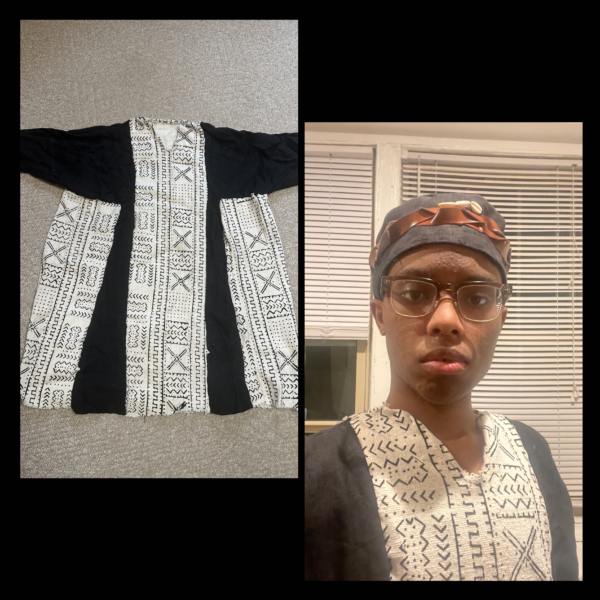
This is my first big sewing project: creating a 16th-century men’s outfit with a linen shirt, a linen doublet, and wool Venetian breeches. I’m using simple, historically inspired techniques and patterns to learn the basics of construction while still aiming for a look that feels at home in late-1500s Venice. I have completed my linen shirt, and the patterns for my doublet (I built a muslin mock-up to test the fit before cutting the linen for the doublet). I am now stitching the doublet together. I am using both hand-sewing and machine sewing.

 I’m making this ensemble for the Barony of Settmour Swamp’s upcoming immersive Venetian Carnevale event, so my focus has been on capturing the style and silhouette you’d expect to see in the streets and salons of Renaissance Venice—clean lines, crisp linen, and those wonderfully dramatic breeches.

 The “why” is fairly simple: I wanted to challenge myself, learn to sew from the ground up, and make something I’d be proud to wear at SCA events. It’s still a work in progress (much like myself), but every stitch is teaching me something new, and I’m excited to see it all come together for Carnevale.

Additional Photos:

https://docs.google.com/presentation/d/1sIWB3jPEJANnQPMb5_UtP8C_zmCKPzpAftBTGJXbZ2g/edit?usp=sharing

Lydia Webbe — Falkirk Blanket

This blanket was inspired by the tiny remnant of fabric: the Falkirk Tartan. It’s not a true tartan, really comparable to a modern buffalo check. I adore everything about this piece of cloth. It was found by Robert Wallace in 1933, who was working construction to enlarge the town’s bus station. The cloth was covering a jar of silver coins that suggest a date of about 240 CE (based on the emperor on the coins and the amount of wear). What I find especially inspiring is that this construction worker knew that the fabric was worth saving as well as the coins. I would have liked to have talked with this fellow. 

For my project, I used the weave structure and color pattern of the original fabric. A 16 thread repeat both in color and warping. Because of the nature of the extant, it’s not clear which is warp and which was weft. The pattern could have been weft controlled. Having done both, I prefer to weave herringbone that is complicated in the set up, and zen in the weaving.  After weaving about 21 ft of fabric, I took this to my local event Harvest Moon, where a whole bunch of folks sat around the table and we waulked the fabric. For this process the fabric was soaked, then kneaded and thrown on the table, then passed in a circle. With wool fibers, heat plus agitation equals felt. Even though this was soaked in cool water, we still saw a noticeable change in the fabric texture. The color pattern started out as squares and shifted into rectangles. It was amazing to see and feel. Once the fabric was dry, I cut it into 3 strips to make a blanket to sit on at outdoor events, and sit under during these chilly evenings as winter creeps in. 

This was a big project. There are a lot of project diary posts in my blog. 

Optional Additional Links: Facebook Album https://www.facebook.com/media/set/?set=a.122217706706102625&type=3

East Kingdom Tiktok video of Waulking: https://www.tiktok.com/@officialeastkingdomsca/video/7550876168363281694?is_from_webapp=1&sender_device=pc&web_id=7575171315519456782

Photo by Brendan Crane

Ianthe d’Averoigne — Blackwork Coif

  • Your Name and Title: Countess Ianthé d’Averoigne, OR, OL, CoC, CCoM
  • Title of your Project: Blackwork Coif
  • Location: Barony of Carolingia
  • East Kingdom Wiki Link: https://wiki.eastkingdom.org/wiki/Ianthe_d%27Averoigne
  • Website/Blog Link: http://string-or-nothing.com
  • Category: Textiles — Embroidery

I was part of a group effort to interpret a historical design, taken from Victoria & Albert Museum holding T.844-974. Participants were given free rein to work the piece in any style they wished. I chose traditional inhabited blackwork – with some liberties. I used silk, metal wrapped thread, and gold tone paillettes, on 72/74 count linen. My piece is true to the over the top opulence of the time, but departed from historical practice in the sheer number, complexity, and variety of fills used.

The piece was part of a massed exhibit in Sheffield, UK in December of 2023, where it was requested for permanent collection by staff of the Victoria & Albert Museum (one of the sponsors). I donated it, and my coif can now be reserved for in-person viewing in the museum’s new South Wing. It can also be seen on the V&A website in ultra high resolution photos, and with my accompanying essay on exactly why it is and is not period-adherent (link below).

Official Victoria and Albert Museum collection page for the coif. Includes very high resolution photos of front and back (much better than mine):

https://collections.vam.ac.uk/item/O1790773/an-unstitched-coif—coifs-salazar-kim-brody

Detailed write-up on materials and methods. Permission granted to organizers of the display to use any desired text and photos from this page:

Temair ingen Muiredaich — 14th Century Reliquary Bag

  • Name & Title: Maistreas Temair ingen Muiredaich, OP
  • Project Title: 14 th Century Reliquary Bag
  • Local Group: Barony of Dragonship Haven
  • EK Wiki: https://wiki.eastkingdom.org/wiki/Temair_ingen_Muiredaich
  • Blog: https://diverseartsdabbler.blogspot.com/
  • Category: Textiles — Embroidery

This was a stretch project to earn my first competency for the Keeper’s of Athena’s Thimble. The project is based off of the research of Richard Wymarc, OL and started with Pattern Y-011: An Embroidered Bag. The full links are in the documentation and on my blog. The original bag is located in the Victoria & Albert Museum, London, England, with the descriptor: “Bag, German, late 14th century. Plied white linen thread and colored silks in satin stitch on linen.” I used linen, silk threads and Japanese gold for the goldwork on the front of the bag.

This bag had several stretches for me. I learned a little more about adding a lining to a bag. Don’t be afraid to cut it bigger than you think you need. I learned to do a basic 5 strand square fingerloop braid. I do not recommend using thin silk for your first attempt and gave up on up trying to recreate the 2 wide and 2 narrow brads at the ends of each pull. Also, the pull strings are too short because I had no idea how much length would be eaten up by the braiding The most upsetting part was putting the unreinforced holes in with an awl to remain true to the original bag. The other stretch was the handle for the bag. While it conjectured to be circular tablet weaving, I wanted to try circular inkle weaving first. While my handle colors do “spin”, they do not have the noticeable “V” where the direction of weaving was reversed that you would get from card weaving. I also ran out of silk and decided to just fringe the ends of the handle.
Link to the blog page about the bag:
https://diverseartsdabbler.blogspot.com/2025/07/brick-stitch-bag.html

Link to the documentation for Period Competency in Athena’s Thimble:
https://drive.google.com/file/d/1YpvuAtqhqjG3tm1OqBZwTjiGWXdy5EyT/view?usp=sha
ring

A small write-up with the examples of the edgings I tried for the sides:
https://drive.google.com/file/d/1nNH1MSXoa_Wu7AnLt4zhcTt4kvm2MJQQ/view?us
p=sharing

Rosamund von Schwyz — Basket Cover

As a member of Athena’s Thimble Embroidery Guild, I like to “advertise”.  I could never remember more than 10 categories out of the 12 at any given moment, so I wanted to make something that would show all 12 forms so 1) I’d remember them, and 2) people could see the similarities and differences.  I decided to use the Tudor Rose as a motif.

From left to right, the categories (stitch used) are: Row 1: Counted Thread (cross stitch), Padded Work (trapunto), Couching & Laidwork, Openwork (pulled work).  Row 2: The Thimble’s badge, Canvaswork (needlepoint), Lacis, Applique (onlay).  Row 3: Needlelace (teneriffe), Metal Thread (Or Nue), Free Embroidery, Blackwork/Monochrome Embroidery.  I used Pleated Embroidery/Smocking to make the edging that helps hold the basket cover on the basket.

The number of petals varies depending on the form.  I was trying to keep the motifs roughly the same size, although the corners wound up being larger.  The beads next to each form are the beads the Thimble gives for competency in the form.  The ones for the smocking are next to the Thimble’s badge.

Proudly powered by WordPress | Theme: Baskerville 2 by Anders Noren.

Up ↑