Alienor Hathaway – Saint Hildegard Von Bingen’s Recipe for Medicinal Nutmeg
Name: Alienor Hathaway
Wiki: https://wiki.eastkingdom.org/wiki/Alienor_Hathaway

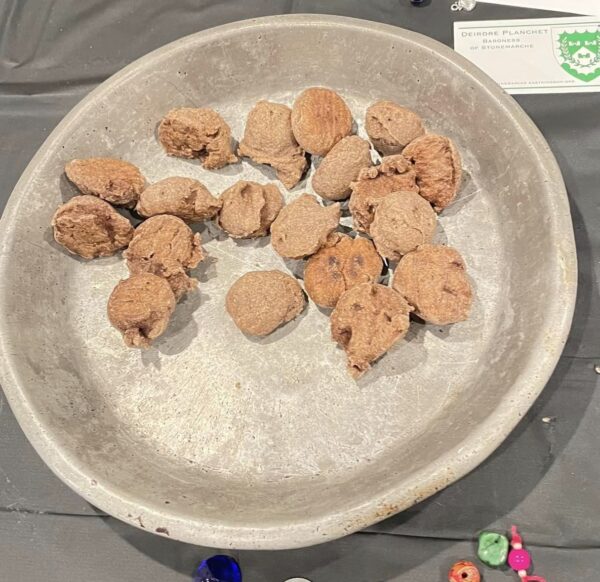
Saint Hildegard Von Bingen’s Recipe for Medicinal Nutmeg from Physica. Liber subtilitatum diversarum naturarum creaturarum.
1 cup whole wheat flour
1 tsp ground nutmeg
1 tsp ground cinnamon
¼ tsp ground cloves
1 cup of water on hand (only add as needed)

Preheat the oven to 375 degrees Fahrenheit. Mix the dough until it forms. Roll out into cookie-shaped cakes. Bake as the oven requires approximately 15 minutes. Yield will depend on the size of the cakes.

My method was influenced by a blog post by Lady Lynne Fairchild of the Middle Kingdom. She identified the section by translation and used a similar proportion. (Fairchild 2020) I used different temperatures and water amounts and cooked for less time. Despite the original recipe calling for equal parts of spice, through testing, I found that clove overpowers all the other flavors, so it could even be adjusted to ⅛ a teaspoon.

Documentation: https://docs.google.com/document/d/1CkPS_-iTudlC1W-4DrjkDlnQXov6GlJ712rxGrzVpp4/edit?usp=sharing

Markus Farmaðr – Iron Gall Ink

Name: Markus Farmaðr
Wiki: https://wiki.eastkingdom.org/wiki/Markus_Farma%C3%B0r

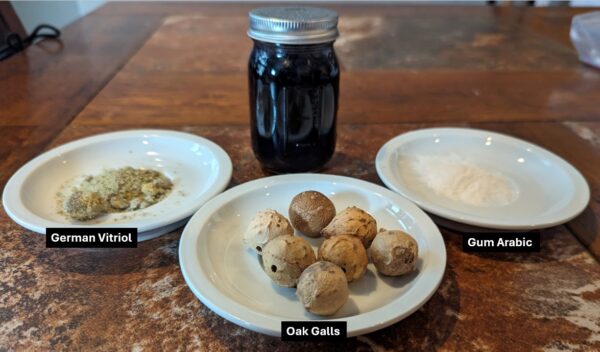
The project being displayed began as an attempt to learn more about making period inks & dyes to assist a friend and illuminator have access to their first period ink.  The investigation led me through various media to discover Ugo da Carpi, a venetian woodblock printer, and his recipe for Oak Gall inks (1535). 

The exploration of the ink was interesting because it ultimately allowed me to create something new to support other people’s art and allow them to be closer to the medieval artists who continue to inspire them to create scrolls for the East Kingdom populace.

In addition, from a scientific perspective, while the source material wouldn’t have necessarily known why the materials reacted the way they did, this project allowed me to investigate deeper to gain an understanding of the chemical reactions at play.


Optional Additional Links: Power Point Presentation

Emeline la Chauciere – Old World Roses

Name: Emeline la Chauciere
Wiki: https://wiki.eastkingdom.org/wiki/Emeline_la_Chauciere

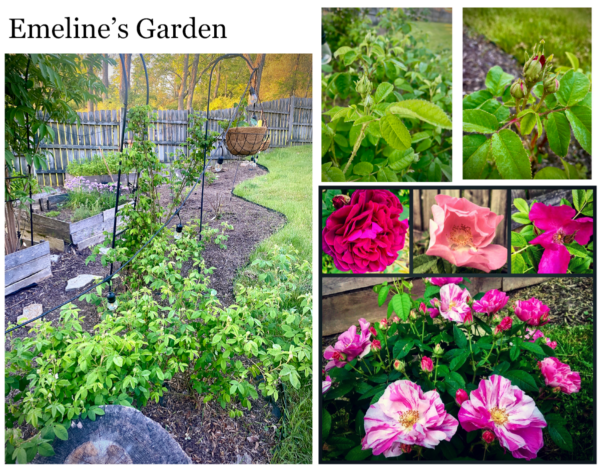
Over the past few years, my research project has focused on the cultivation and study of historical roses, with a particular emphasis on old world varieties. As a dedicated horticulturist and historian, I have meticulously researched and cultivated several period rose varietals in my garden. These efforts have allowed me to bring to life the rich heritage of roses such as Rosa gallica and Alba semi-plena, which were cherished in ancient and medieval times for their beauty, fragrance, and medicinal properties. My work delves into the historical significance of these roses, examining their cultural, symbolic, and practical roles in societies throughout history.

The presentation of my research includes a collection of photographs showcasing my garden, where these exquisite roses flourish. Each photo captures the timeless elegance of these varietals, providing a visual journey through the past. Accompanying the images are brief notes and references that highlight the historical context and characteristics of each rose type. This project not only aims to preserve the legacy of these remarkable flowers but also to inspire a deeper appreciation for their enduring beauty and historical importance. Through my research, I hope to contribute to the ongoing conservation and revival of old world roses, ensuring that their legacy continues to bloom for generations to come.

Additional Pictures and Documentation Here: https://drive.google.com/drive/folders/1–67NG7cq7LSTZBheoXBMFcTMDSBe3Rx?usp=sharing

Emeline la Chauciere – Tudor Ensemble

Name: Emeline la Chauciere
Wiki: https://wiki.eastkingdom.org/wiki/Emeline_la_Chauciere

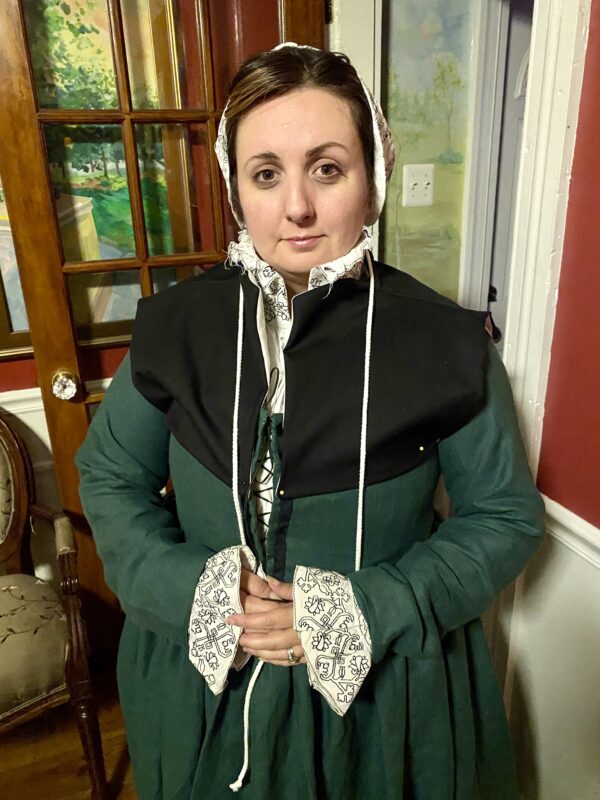
My current research project involves the creation of my first Tudor ensemble, an endeavor that combines historical processes with meticulous craftsmanship. The ensemble includes several key components: a chemise adorned with blackwork details, a hand-sewn green linen kirtle, tie-on sleeves, a wool and linen over partlet, and a coif. Additionally, I am in the process of adding an apron and a hat to complete the look. I drafted the kirtle pattern myself and employed traditional techniques such as pad-stitching the bodice to create channels for light boning, ensuring both historical authenticity and structural integrity. The skirt was cartridge pleated onto the bodice, a technique that adds both volume and elegance.

The photos presented here capture the ensemble in its near-final stages, with final alterations and hemming still to be completed. Creating this ensemble has been an immensely enjoyable and educational experience, allowing me to immerse myself in the garb-making practices of the Tudor period. The project was inspired by a recent trip to London, where I had the opportunity to explore the rich history and fashion of the era. I also then returned to the States to autocrat an Elizabethan-themed event in honor of Shakespeare’s folio. Creating this ensemble, helped to really bring all of these events to a more meaningful conclusion.

Additional Pictures: https://drive.google.com/drive/folders/1qIMvAoJT3S_THQlRkUWhyOtXYF4cleim?usp=sharing

Amalie von Hohensee – Adventures in Bobbin Lace

Name: Amalie von Hohensee, OL
Wiki: https://wiki.eastkingdom.org/wiki/Amalie_von_Hohensee

My main focus in the A&S world over the past several years has been embroidery. However, the East Kingdom’s embroidery guild happens to have several categories related to lace. While the laces covered by this guild all fall under the category of “embroidered laces,” working on these laces inspired me to explore other lacemaking techniques, which led me to explore bobbin lace.

Since metal threads have been my focus in embroidery, I also wanted to explore metal threads in the context of bobbin lace. Interestingly, many early bobbin laces were made with metal threads, so while metal threads laces are not commonly seen by modern practitioners of the craft, this area of inquiry made sense to follow in the context of the SCA-era bobbin lace.

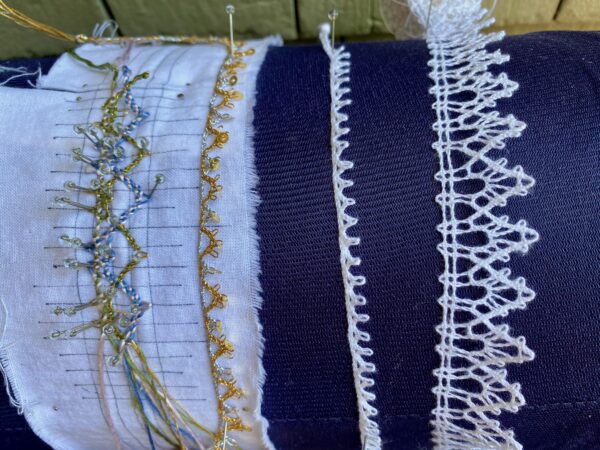
This A&S project displays my first foray into bobbin lace. The narrow linen lace was my first completed lace piece, using a very simple pattern from Gilian Dye’s Introduction to Bone Lace. The gold and silver metal thread lace was my second lace project and my first experiment with metal thread and spangles. The larger linen lace is an ongoing project that will complete an Athena’s Thimble project I’m currently working on. The silk and metal thread piece is my first attempt to chart my own lace based on an extant piece, taken from a late 16th century Italian smock at the MET museum.

To view my documentation, click here

To view more photos of this project, click here

Proudly powered by WordPress | Theme: Baskerville 2 by Anders Noren.

Up ↑